
There’s a reason this moment feels so familiar.
The language may shift. The headlines may change. The corporate statements may get softer, more cautious, or disappear altogether. But the pattern is not new. We have seen this before. Progress is followed by backlash. Bold promises are followed by retreat. People doing equity-focused work are often told to slow down, quiet down, or make the work more “palatable.”
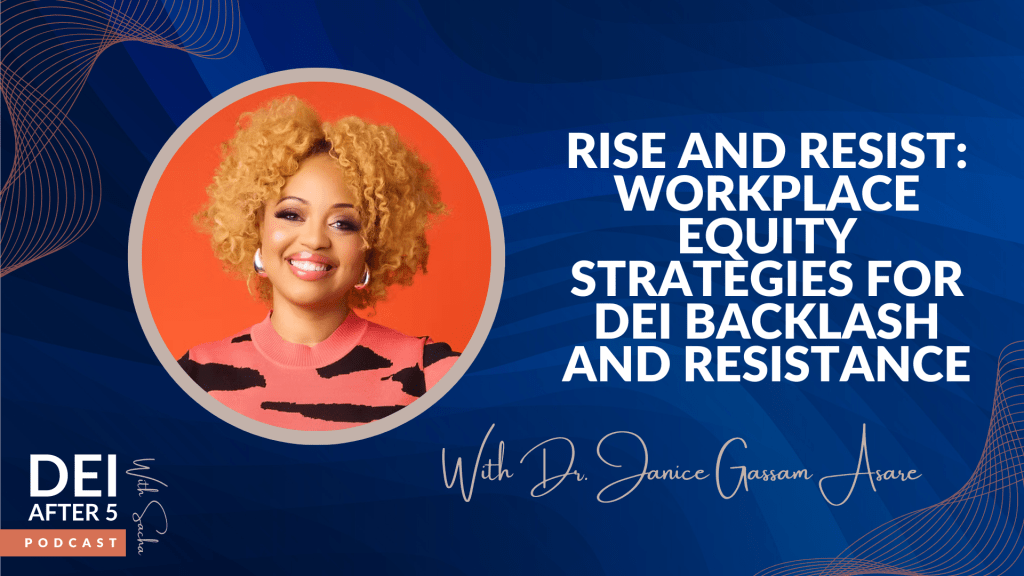
That is part of why Dr. Janice Gassam Asare’s work feels so necessary right now.
In a recent conversation about her book, Rise and Resist: How to Reclaim Workplace Equity and Justice, she emphasized the importance of understanding history. More people need to hear this message. If we want to understand current workplace dynamics, we cannot ignore history. We do not need more watered-down takes about whether this work has “gone too far.” We need context. We need strategy. We need the kind of grounded perspective that reminds us resistance did not start in 2020. It certainly did not end when organizations stopped posting black squares. It also didn’t end with issuing performative statements.
What many people are experiencing now is not a sudden shift. It is a reassertion of old systems.
And that is exactly why history matters.
Workplace equity work did not begin with recent DEI trends
One of the biggest mistakes organizations make is treating equity work like a short-term business trend. Something that surged after George Floyd. Something that lost momentum. Something now being reconsidered because political winds changed.
That framing is too shallow.
The fight for dignity, fairness, access, and justice in the workplace has always been connected to a much longer story. The current backlash against DEI did not come out of nowhere. It is part of a larger cycle of resistance to change, especially when that change threatens existing power structures.
That is why Dr. Gassam Asare’s call to become students of history matters so much.
We begin to understand the legacy of Black resistance, labor resistance, community organizing, and behind-the-scenes advocacy. When we do this, we stop acting like today’s challenges are unprecedented. They are not. The tactics may look different. However, the underlying dynamics are familiar. These include erasure, backlash, intimidation, silence, and strategic attempts to make people believe they are isolated.
They are not isolated. And they are not imagining it.
History reminds us that people have always found ways to push back.
Resistance is not always loud, public, or polished
One of the strongest through lines in this conversation is that resistance does not always look the way people expect.
It is easy to celebrate the bold, visible moments. The speeches. The protests. The public acts of defiance. Those moments matter. They are not the only form of resistance. In many workplaces, they are not always the safest option. They may also not be the most sustainable option.
Sometimes resistance looks like refusing to normalize harm.
Sometimes it looks like documenting what others want ignored.
Sometimes it looks like building community quietly. It may involve sharing information strategically. It can also mean mentoring someone who is being pushed to the margins. Another option is using your position to open a door that was never designed to open on its own.
That kind of resistance matters too.
Too often, people dismiss small acts because they do not feel dramatic enough. But small acts are often what keep people grounded long enough to keep going. They can disrupt harmful patterns, protect someone’s dignity, and create the conditions for larger change later.
That is not small. That is foundational.
Resilience is not softness. It is stamina.
We talk about resilience so casually sometimes that it loses its weight.
But real resilience is not about pretending things do not hurt. It is not about smiling through dysfunction or becoming so adaptable that you accept anything. Real resilience is about stamina. It is about learning how to keep your clarity in systems designed to wear you down.
That is why the stories Dr. Gassam Asare lifts up matter.
The people who came before us did not do this work because it was easy. They did it while carrying risk, grief, exhaustion, and often very little public recognition. Some were visible. Many were not. Some were celebrated later. Many never were. But they kept going anyway.
That is the kind of resilience this moment calls for.
Not empty inspiration. Not pressure to be endlessly strong. But a deeper understanding recognizes that the road has always been hard. Surviving it often requires strategy, community, and a willingness to keep moving even without immediate reward.
There are people doing that right now in workplaces every day.
People who are advocating without the language they used to have.
People who are trying to protect others while navigating their own fear.
People who are reading the room, adjusting the message, and still refusing to give up on what matters.
That is resilience too.
We need to stop underestimating behind-the-scenes resistance
This part especially matters in the workplace.
Many people are currently asking a similar question. How do you push for equity inside systems that clearly resist change?
The answer is not always direct confrontation.
Sometimes the answer is strategic action that does not announce itself.
Behind-the-scenes resistance is often what keeps movements alive when public support fades. It is the person who shares information others need. The leader who redirects resources where they are needed most. The team member identifies a harmful pattern. They do this in the right room, at the right time. They do it in a way that actually moves something. The person who protects someone else from being isolated. The one who asks the question nobody wants on the record, but everyone needed asked.
This kind of action is especially important in corporate settings, where retaliation may be subtle but real. Not everyone has the same level of safety. Not everyone can afford to be visible. That does not mean they are not resisting. It means they are being strategic.
And frankly, strategy has always been part of survival.
Collective action still matters, even when the work feels fragmented
Another reason history matters is because it reminds us that change rarely happens through individual effort alone.
Yes, one person can spark something. One person can challenge a norm. One person can use their influence well. But long-term change usually requires connection. It requires people who are willing to share ideas. They need to back each other up, build trust, and maintain relationships, even when the work gets hard.
That is true in movements, and it is true in organizations.
A lot of equity work has become fragmented. Some people have gone quiet out of fear. Some are burned out. Some are trying to figure out what language is still “allowed.” Some are disillusioned by how quickly organizational commitments disappeared.
All of that is real.
But isolation is one of the most effective tools systems use to weaken resistance. History teaches us that solidarity is not optional. It is part of how people survive. It is part of how they stay clear. And it is part of how they build something more durable than a moment of public attention.
Community is not a side note to this work. It is infrastructure.
Empowerment does not belong to one group alone
One thing I appreciate in this conversation is the reminder of an important fact. Marginalized communities often carry the heaviest burden in justice work. However, the responsibility for resistance cannot remain solely with them.
The work of challenging harmful systems is not only for the people most harmed by them.
It belongs to anyone who benefits from dignity, fairness, and humanity in the workplace. It belongs to leaders. It belongs to peers. It belongs to people with formal authority and people without it. It belongs to those pushed directly to the margins. It also belongs to those with enough access to interrupt what others cannot.
That does not erase difference. It does not flatten lived experience. But it does emphasize that meaningful workplace equity requires more than asking marginalized employees. We should not expect them to keep carrying the emotional and strategic load by themselves.
If history teaches us anything, it is that resistance grows when more people decide the status quo is unacceptable.
This is not just about DEI. It is about how people survive systems that were never built for their full humanity
That is the deeper takeaway here.
Yes, this conversation is about DEI backlash. Yes, it is about workplace equity and justice. But it is also about something bigger. It is about what people do when institutions tell them to shrink. Institutions also tell them to comply or forget what they know.
Some will disengage. Some will leave. Some will comply publicly and resist privately. Some will keep naming what others are trying to erase. Many will combine these strategies. They figure out how to protect themselves. They will keep moving.
There is no one right way to do that.
But there is value in remembering that resistance has a lineage. Resilience has a lineage. Even the quietest act of refusing harm has a lineage.
And when people know that, they stop feeling like they have to invent courage from scratch.
What this moment calls for
This moment does not just call for better messaging. It calls for deeper roots.
It calls for people who understand that workplace equity was never going to be sustained by trends. Titles or temporary enthusiasm could not maintain it. It was always going to require courage, memory, strategy, and community.
It calls for people who know that history is not just something to reference when it is convenient. It is a source of instruction.
It calls for leaders who are willing to tell the truth about what is happening in their organizations.
It calls for professionals who are learning how to act with intention, even when the path is not obvious.
And it calls for all of us to remember that resistance is not only about dramatic moments. Sometimes it is quiet. Sometimes it is slow. Sometimes it looks like survival. Sometimes it looks like helping one more person stay intact inside a system that keeps asking them to fracture.
That still counts.
Maybe more than ever, it counts now.
Find out how The Equity Equation can help you get there.